
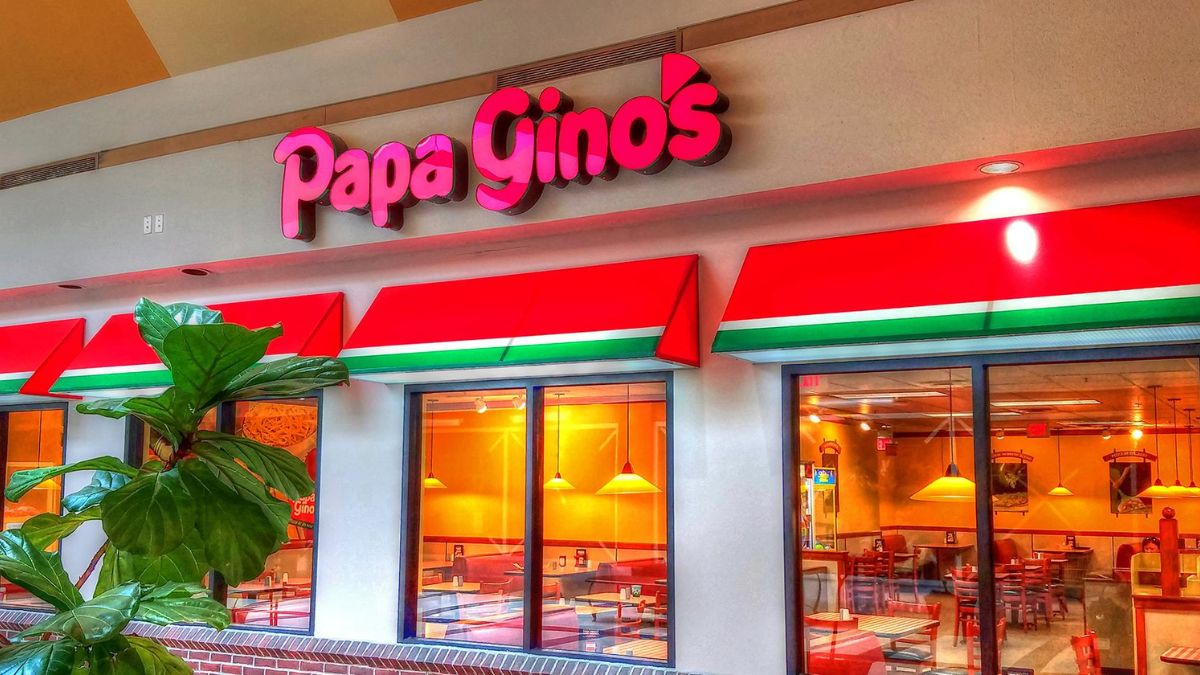
Craveworthy Brands Targets Restaurant Profitability With Papa Gino’s Acquisition and Co-Branding Strategy
Restaurant companies are increasingly looking beyond conventional unit expansion to improve profitability. With operating expenses rising and new restaurant development requiring substantial capital, maximizing revenue from existing infrastructure has become an important strategic priority.
Craveworthy Brands is pursuing this approach through its proposed acquisition of New England Authentic Eats, the Wynnchurch Capital-owned business behind Papa Gino’s Pizzeria and D’Angelo Grilled Sandwiches.
Scheduled to close by the end of December 2026, the transaction represents the largest acquisition in Craveworthy’s history and will increase its restaurant portfolio to 23 concepts.
However, the strategic value of the transaction extends well beyond the addition of more than 100 pizza restaurants and dozens of sandwich shops. Craveworthy intends to use the acquired restaurant infrastructure to improve cost efficiency and accelerate the development of Wing It On!
Acquisition-Led Growth Creates an Established Operating Platform
Developing a restaurant network from the ground up requires considerable investment in real estate, construction, equipment, staffing and local marketing.
Acquiring an existing restaurant organization can provide immediate access to many of these resources.
For Craveworthy, purchasing New England Authentic Eats offers an opportunity to expand its operating platform through established locations with existing customers and relatively stable sales.
The transaction was supported by a recent multimillion-dollar capital raise that introduced additional institutional investors to the company. The purchase price and other financial terms remain undisclosed.
Rather than focusing exclusively on distressed restaurant turnarounds, Craveworthy is acquiring a business that has already undergone significant operational restructuring.
Papa Gino’s Offers Opportunities for Cost Optimization
The financial challenges experienced by Papa Gino’s in 2018 resulted in substantial changes to its restaurant network.
Following its former parent company’s bankruptcy filing and the closure of approximately 100 locations, Wynnchurch Capital purchased the business for $20 million in 2019.
The restructuring created a smaller and more focused operating system.
Craveworthy CEO Gregg Majewski now sees opportunities to improve the brand’s financial performance through better management of labor and ingredient expenses.
This approach builds on the company’s experience with Fresh Brothers Pizza, which joined its portfolio in 2024.
Despite operating in California’s challenging labor environment, Craveworthy was able to stabilize expenses at Fresh Brothers. Management believes similar operational improvements may be achievable across the Papa Gino’s network.
This provides an example of how acquisition experience can become a repeatable capability within a multi-brand restaurant organization.
Fresh Brothers Demonstrates the Revenue Potential of Virtual Brands
Before pursuing a full co-branding rollout at Papa Gino’s, Craveworthy introduced Wing It On! products at approximately 20 Fresh Brothers locations.
The virtual brand initiative, launched in August 2026, enabled customers to order chicken wings and boneless bites prepared inside existing pizza restaurants.
Management reported that the participating restaurants were generating approximately $4,000 in additional weekly sales without increasing staffing requirements.
That figure translates into an illustrative annualized revenue opportunity of approximately $208,000 per location if the weekly sales level is sustained throughout the year.
Across 20 restaurants, the same performance would represent approximately $4.16 million in annualized incremental sales.
These calculations illustrate the potential scale of the initiative, rather than confirmed annual financial results or projected profits. Actual returns depend on sales consistency, ingredient costs, delivery commissions and other expenses.
Full Restaurant Co-Branding Represents the Next Growth Phase
Craveworthy plans to take a more comprehensive approach when introducing Wing It On! at Papa Gino’s.
Instead of limiting the integration to a virtual restaurant offering, the company intends to create physical co-branded locations featuring both concepts.
The planned transformations include exterior signage changes and interior remodeling designed to establish a visible connection between the two brands.
The rollout could increase Wing It On!’s restaurant network to approximately 145 locations.
For a growing restaurant concept, gaining access to established locations could provide a more capital-efficient expansion pathway than relying entirely on standalone restaurant development.
However, physical co-branding introduces additional implementation costs that must be considered when evaluating the model’s return on investment.
Improving Four-Wall Economics Through Shared Infrastructure
Four-wall economics measure the financial performance of an individual restaurant before certain corporate-level expenses
A successful co-branding strategy should improve these economics by generating additional sales without increasing operating costs at the same rate.
Restaurant companies evaluating similar opportunities should monitor several performance indicators:
- Incremental revenue per restaurant.
- Contribution margins across both brands.
- Food and packaging expenses.
- Labor costs as a percentage of sales.
- Delivery platform commissions.
- Customer acquisition costs.
- Remodeling and equipment expenditure.
- Payback period on incremental investment.
Co-branding becomes commercially attractive when the additional contribution generated by the second concept exceeds its implementation and ongoing operating expenses.
The objective is not simply to increase restaurant sales but to improve the financial productivity of each location.
Portfolio Synergies Can Support Multiple Revenue Streams
Craveworthy’s acquisition strategy has emphasized the potential for complementary restaurant concepts since the organization was established in 2022 alongside FG Financial Group’s merchant banking division.
The company’s first acquisition, Wing It On!, established a foundation for developing multiple revenue channels through shared restaurant infrastructure.
Another example under consideration involves Gregorys Coffee and Kinnamōns, both of which became part of Craveworthy’s investment portfolio in 2025.
Combining coffee with a dessert concept could potentially extend trading opportunities beyond traditional breakfast and daytime customer demand.
This approach, often associated with daypart expansion, allows businesses to explore additional sales during periods when existing facilities may be underutilized.
For franchisors, identifying complementary brands requires an understanding of customer behavior, product margins, kitchen compatibility and operational capacity.
Strategic Portfolio Management Remains Essential
Craveworthy has indicated that it intends to pursue acquisitions at intervals of six to nine months.
However, management is also considering potential divestitures as it evaluates which restaurant concepts offer the strongest strategic opportunities.
Maintaining a large portfolio is not necessarily beneficial if certain brands consume disproportionate management attention or fail to complement the broader organization.
Effective portfolio management requires evaluating each concept according to financial performance, market potential, franchisee economics and its contribution to the overall business strategy.
Craveworthy’s willingness to consider selling selected assets demonstrates the importance of prioritizing strategic fit over acquisition volume alone.
Key Lessons for Franchisors and Restaurant Business Leaders
The Papa Gino’s transaction provides a practical framework for restaurant organizations pursuing scalable growth.
Acquisitions can deliver more than additional locations and revenue. They can provide established infrastructure that supports the expansion of complementary concepts.
Operational improvements developed within one restaurant system can also create transferable knowledge that strengthens other brands.
Most importantly, the financial benefits of co-branding should be assessed at the individual restaurant level rather than solely through network-wide growth statistics.
Craveworthy’s strategy illustrates how acquisition-led development, cost optimization and shared infrastructure can potentially work together to build a more commercially efficient restaurant franchise organization.
Discover more about Papa Gino’s Pizzeria Franchise opportunities.