
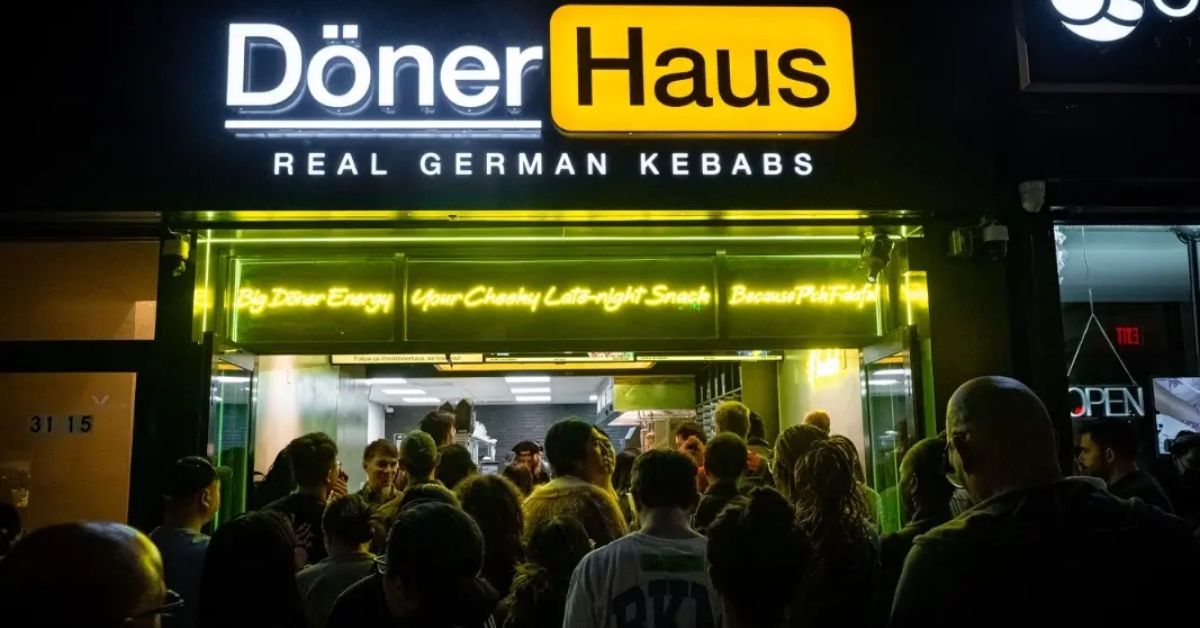
Döner Haus Rapidly Scales to 40+ Units Following Strong NYC Debut
The national expansion of Döner Haus is becoming one of the most closely watched growth stories in the emerging ethnic fast-casual segment. Founded in 2023 and launching franchising in late 2024, the Berlin-style döner kebab brand has already awarded more than 40 franchise units across the United States, with six additional openings scheduled for early 2026.
That pace of development signals more than early excitement — it reflects a concept with validated unit economics, strong operator demand, and a scalable infrastructure.
From Single NYC Location to Multi-State Development
Döner Haus was founded by Nikolaus von Solodkoff, who introduced the brand in New York City’s East Village in 2023. The inaugural location generated approximately $1.9 million in revenue during its first year — a performance level that confirmed consumer demand for authentic Berlin-style döner in the U.S. market.
Following the success of three corporate-owned units in the NYC metro area, leadership moved into franchising with a structured expansion plan.
Today, the brand has:
• Over 40 franchise units awarded
• 15 signed contracts in New York alone
• Open franchise locations in Queens
• Active development in Florida and California
• Five additional openings planned in Long Island, West Palm Beach, and Los Angeles
• Six new units scheduled for early 2026
This measured rollout demonstrates both market appetite and franchisee confidence.
Why the Döner Category Represents a Growth Opportunity
Berlin-style döner kebabs represent a mature, multi-billion-dollar category in Europe, particularly in Germany where tens of thousands of shops operate successfully. However, the category remains largely untapped in the U.S.
Döner Haus is leveraging that gap by delivering authentic, halal-certified beef and chicken kebabs served in traditional Turkish pide bread with fresh vegetables and signature sauces. The product is organic, gluten-free, and free from fillers — attributes that resonate with modern consumers.
With consumer interest in global cuisine accelerating and the broader ethnic food market projected for significant long-term growth, Döner Haus is positioned within a high-demand segment that still offers white space.
Franchise Model Built for Multi-Unit Economics
One of the strongest drivers behind the brand’s rapid franchise development is its operator-friendly economic structure.
Key investment and operational highlights include:
• Buildout under $400,000
• Compact footprint starting at 750 square feet
• Royalty fee of 3%
• Marketing contribution of 2%
• Delivery and take-away optimized design
• Lower labor intensity compared to traditional QSR models
Compared to restaurant concepts requiring $1–2 million in buildout, Döner Haus offers a lower capital barrier, improved real estate flexibility, and faster reinvestment potential.
This structure makes multi-unit development practical, which is why most franchise partners commit to three or more locations from the outset.
Controlled, Strategic Expansion
Despite awarding more than 40 units in a short period, leadership emphasizes “growth, but controlled.” The brand is offering franchising across all 48 contiguous states, but prioritizes experienced operators who understand territory development and long-term scaling.
Rather than pursuing unchecked expansion, Döner Haus is building density in strategic markets to strengthen brand presence and supply chain efficiency.
With strong first-year revenue performance, favorable unit economics, and disciplined national expansion, Döner Haus is transitioning from emerging concept to structured growth brand within the fast-casual restaurant franchise sector.