
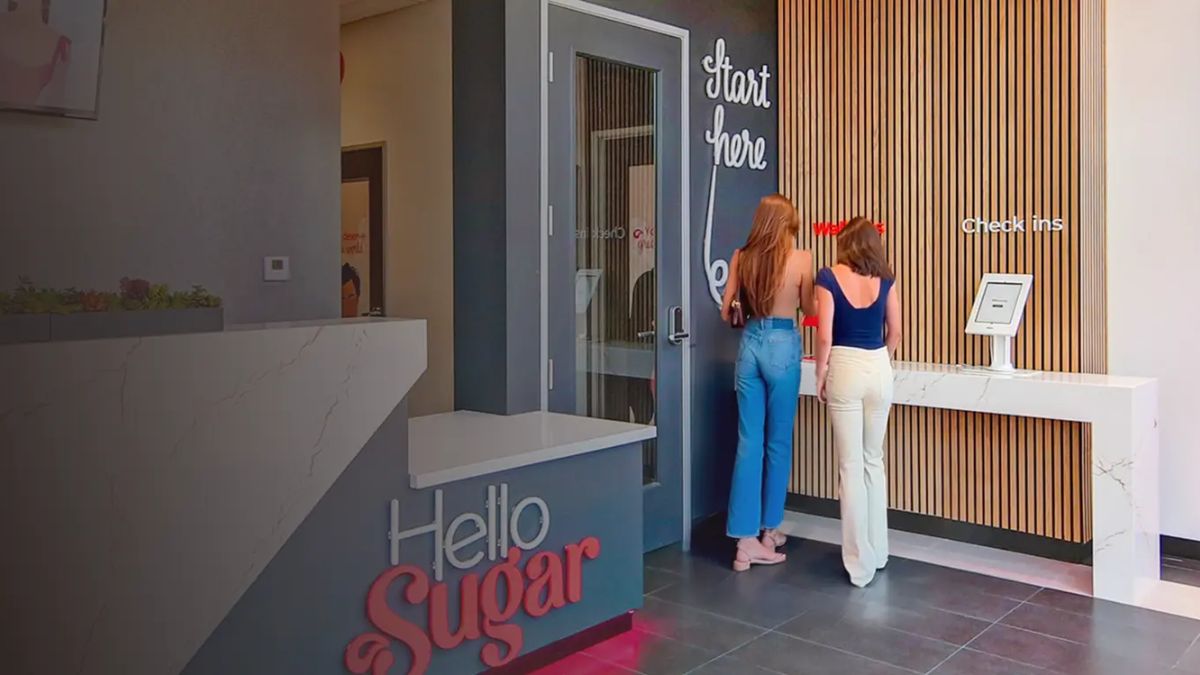
How Hello Sugar Built a 305-Location Franchise Network Through Smarter Expansion and Automation
Scaling a franchise business requires more than attracting investors and signing development agreements. Successful expansion depends on creating an operating system that franchisees can implement consistently while managing costs, acquiring customers, and building sustainable revenue.
Hello Sugar, the rapidly growing American hair removal franchise, offers an interesting example of how brands can approach these challenges differently.
Under founder and CEO Brigham Dallas, the company has developed a growth strategy that combines smaller-format salon launches, technology-driven customer management, and a structured pathway toward larger retail locations.
By November 2026, Hello Sugar reported approximately 305 locations, with the company opening an estimated 10 to 15 additional units each month.
Behind those numbers is a business model that challenges the assumption that franchise growth must begin with expensive storefront development.
Why Hello Sugar Starts Small Before Scaling
Many service-based franchise businesses face the same challenge during expansion: they need physical locations to serve customers, but opening those locations can require significant capital before revenue begins.
Hello Sugar addresses this issue by allowing franchisees to begin in compact salon suites.
These locations provide sufficient space to deliver core hair removal services while limiting some of the costs associated with larger commercial premises.
The concept is straightforward.
Rather than committing substantial capital to a large salon immediately, franchisees establish a smaller operation, build local awareness, attract customers, and develop operating experience.
The business can then progress toward a flagship location once it satisfies the franchisor’s development criteria.
This creates a phased expansion strategy in which franchisees begin building customer relationships before assuming the full expenses associated with a larger location.
The model is particularly relevant to service businesses where demand can be developed through appointments, memberships, referrals, and repeat visits.
Reducing the Financial Barriers to Franchise Development
Capital requirements influence how quickly a franchise system can attract qualified operators and enter new markets.
Hello Sugar’s smaller-format model creates a significant difference between the initial suite investment and the cost of a flagship salon.
Reported 2026 franchise disclosure figures place the initial investment for a salon suite between $92,210 and $130,654.
A larger flagship location carries an estimated investment ranging from approximately $265,374 to $734,705.
The lower initial investment can make it easier for qualified entrepreneurs to begin operating while planning for a more substantial future location.
The development timeline is another important consideration.
A suite may be operational within two to three months, compared with approximately a year for a full-sized salon.
Opening earlier can allow a franchisee to begin generating revenue, collecting customer feedback, and refining local marketing efforts while the larger development process continues.
However, the suite model should not be confused with eliminating the need for future capital.
Hello Sugar expects franchisees to eventually develop flagship locations, making long-term financing and expansion planning essential.
Customer Acquisition Before Major Real Estate Investment
One of the most interesting aspects of Hello Sugar’s strategy is the opportunity to establish local demand before transitioning into a larger facility.
For a beauty service business, customer acquisition is fundamental to financial performance.
A well-designed marketing program must do more than generate inquiries. It needs to turn prospective customers into booked appointments and encourage repeat visits.
The smaller-format approach allows a franchisee to begin developing these relationships without immediately operating a larger salon.
Marketing performance can be evaluated through measurable indicators such as appointment bookings, customer acquisition cost, repeat booking rates, membership participation, and customer lifetime value.
These metrics help operators understand whether local demand is developing strongly enough to support additional capacity.
Although Hello Sugar’s individual franchise marketing results vary, the broader principle is valuable for growing franchise systems: market development and real estate expansion do not always need to occur at the same time.
How Automation Supports Hello Sugar’s Franchise Growth
Hello Sugar’s expansion is supported by substantial investment in technology.
The company reports that approximately 70% of customer inquiries are managed through automated systems, reducing reliance on traditional reception processes.
In appointment-based businesses, missed calls and delayed responses can create friction between customer interest and completed bookings.
Automated customer communication can help address that problem by allowing customers to engage with the business outside regular staffing hours.
For a growing franchise system, the advantages extend beyond convenience.
Centralized technology can help standardize customer interactions, reduce repetitive administrative work, and create more consistent booking experiences across locations.
Hello Sugar has invested in a technology organization of approximately 45 employees, alongside a 13-person media team.
These resources demonstrate the operational infrastructure supporting the company’s expansion.
The franchise also charges a reception and customer experience fee of $3.25 per serviced appointment, as described in its franchise disclosure information.
That fee highlights an important distinction: centralized automation can reduce certain operating tasks, but franchisees must still account for the cost of accessing those services.
Why Memberships and Repeat Business Matter
Hair removal services can create recurring customer relationships because many treatments require periodic appointments.
For Hello Sugar, this creates opportunities to build customer retention programs rather than depending entirely on acquiring first-time visitors.
The company has used membership-focused technology to support appointment scheduling and customer management.
In a published customer case study involving salon management platform Boulevard, Hello Sugar reported an 88% increase in sales volume, a 57% increase in appointments, and a 60% increase in membership redemptions following its adoption of the platform.
The case study also reported that online booking became three times faster.
These results describe the company’s experience with a technology implementation and should not be interpreted as guaranteed performance for individual franchise locations.
Nevertheless, they illustrate how booking convenience, membership administration, and operational visibility can contribute to the customer experience.
For franchise brands, the broader lesson is that customer retention infrastructure deserves as much attention as lead generation.
Building a Franchise Support System That Can Scale
Rapid expansion creates challenges that smaller businesses may not encounter.
As a franchise network grows, the franchisor must support more operators, coordinate marketing across additional territories, maintain service standards, and provide consistent operational guidance.
Hello Sugar has responded by expanding its internal teams across technology, marketing, and franchise operations.
Centralized support can allow franchisees to focus more attention on local execution, employee management, and service quality.
However, the effectiveness of that support depends on whether it produces measurable value for operators.
A strong franchise system needs clearly defined responsibilities between corporate teams and franchise owners.
Technology, marketing, and operational assistance should work together rather than function as disconnected services.
Hello Sugar’s approach demonstrates how corporate infrastructure becomes increasingly important when a brand moves from dozens of locations into a nationwide network.
The Role of Smaller Locations in Faster Market Expansion
Real estate development can be one of the slowest components of franchise growth.
Finding suitable premises, negotiating leases, obtaining approvals, and completing construction may require many months.
Smaller salon suites can shorten some of those processes by using existing commercial spaces designed for independent beauty professionals.
This flexibility can help a franchise brand enter additional markets without immediately securing conventional retail storefronts.
For Hello Sugar, the result has been a network in which the majority of its approximately 305 locations operate in suite formats.
Around 60 locations were reported as storefronts in November 2026.
The company ultimately expects its franchisees to move into flagship locations, making the suite network both an operating base and a pipeline for future storefront development.
Acquisitions as an Additional Growth Channel
Organic franchise development is not Hello Sugar’s only expansion method.
In 2025, the company announced the acquisition of assets from 20 Waxxpot salons operating across four states.
The transaction expanded its presence in Georgia, Kentucky, Ohio, and Texas.
Acquiring existing salon assets can offer advantages over developing every location from the ground up.
Depending on the transaction, an acquiring brand may gain access to established facilities, existing equipment, and local market infrastructure.
However, acquisition-driven expansion also introduces integration challenges.
Technology platforms, employee training, service standards, and customer communication must be aligned with the acquiring brand.
For Hello Sugar, the Waxxpot transaction added another component to a growth strategy already built around smaller-format development.
Five Growth Principles Franchise Brands Can Learn From Hello Sugar
Hello Sugar’s approach offers several lessons for franchisors evaluating their own development strategies.
1. Validate market demand before committing to larger facilities.
A smaller operating footprint can provide an opportunity to test local demand and develop customers before expanding.
2. Build repeatable operating systems.
Expansion becomes more difficult when every franchise location relies on different procedures, technology, and customer management practices.
3. Treat customer retention as a growth engine.
Repeat bookings, memberships, and long-term customer relationships can help reduce dependence on continuous new customer acquisition.
4. Invest in centralized infrastructure.
Corporate marketing, technology, and operational support become increasingly important as the franchise network expands.
5. Match development commitments to operational readiness.
A larger location should be supported by realistic revenue expectations, adequate financing, staffing capacity, and an established operating plan.
These principles are applicable beyond the beauty industry, particularly to franchises in personal services, wellness, education, fitness, and other appointment-based sectors.
What Hello Sugar’s Growth Means for Franchise Development
Hello Sugar’s expansion demonstrates that franchise development does not always need to follow a single real estate formula.
By combining smaller initial locations with centralized technology and a pathway toward larger salons, the company has created a model intended to support both market entry and future expansion.
Its reported 305-location network represents meaningful growth, but the next stage will require continued attention to franchisee economics, customer satisfaction, and the successful transition of suite operators into storefronts.
For franchisors and growth professionals, the larger takeaway is that sustainable expansion depends on the relationship between customer acquisition, operational capacity, capital requirements, and support infrastructure.
Hello Sugar’s strategy provides a practical example of how those elements can be designed to work together rather than treated as separate challenges.
Discover more about Hello Sugar Franchise opportunities.