
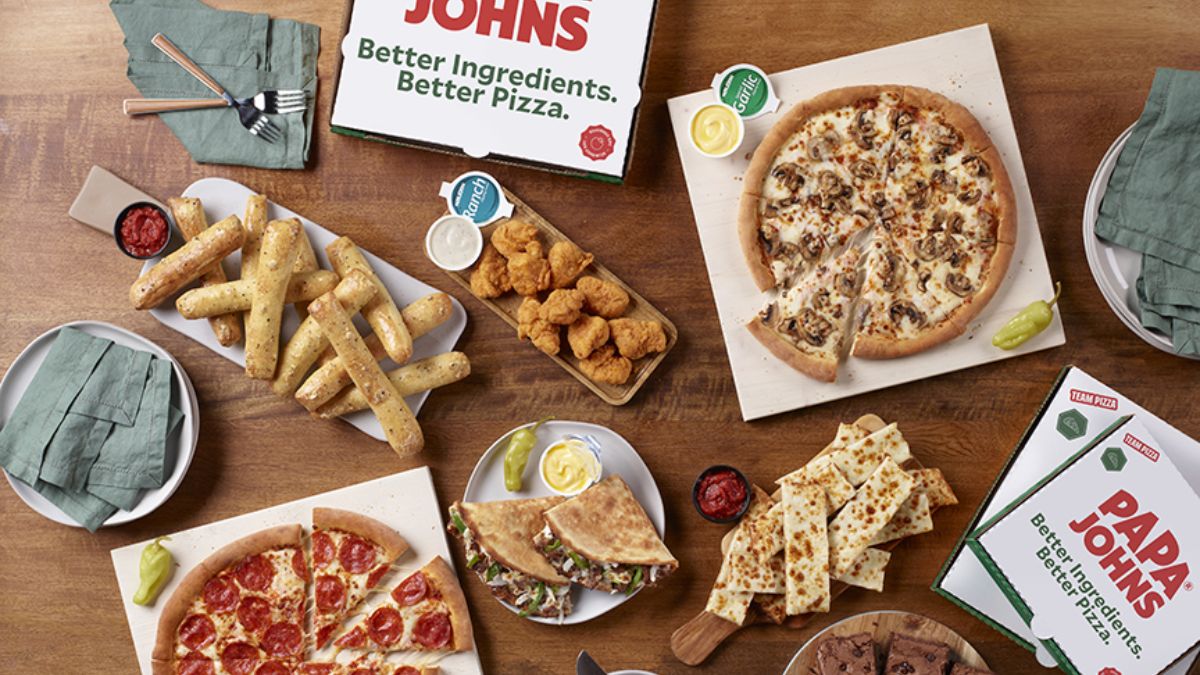
Papa Johns Uses AI and Customer Photos to Improve Pizza Quality and Drive Growth
Papa Johns is combining artificial intelligence, customer rewards, and real-time feedback to strengthen restaurant performance and improve the customer experience.
What if a simple photograph of a pizza could help a restaurant chain improve its operations across thousands of locations?
That is the idea behind a new artificial intelligence initiative from Papa Johns, one of the world’s largest pizza delivery brands.
The company is encouraging customers to share photographs of their delivered pizzas, using the images and accompanying feedback to support an AI-powered quality monitoring system.
The initiative is more than an experiment in food photography. It represents a business strategy that connects customer engagement, operational analytics, and product quality improvement.
At a time when restaurants are competing aggressively for consumer spending, Papa Johns is exploring whether technology can help it deliver a more consistent product while strengthening customer relationships.
Turning Customer Feedback Into Business Intelligence
Customer feedback has traditionally been collected through surveys, online reviews, customer service interactions, and restaurant complaints.
While these methods provide useful information, they can be difficult to evaluate consistently across a large business.
Papa Johns is introducing a more visual approach.
By collecting photographs of completed orders, the company can examine the actual appearance of products delivered to customers.
Artificial intelligence can then help identify patterns that might otherwise go unnoticed.
For example, repeated images showing overly dark cheese or inconsistent crust preparation could indicate a recurring operational problem.
When combined with customer comments, these photographs may provide a clearer picture of how well individual restaurants are meeting brand expectations.
The potential advantage is scale.
Instead of manually examining thousands of customer complaints, a centralized system could help organize visual information and highlight areas that deserve management attention.
For a global restaurant brand, this approach could improve the speed and consistency of operational decision-making.
How the Papa Johns AI Pizza Inspection System Works
The company’s technology uses image analysis to evaluate visible characteristics of finished pizzas.
Papa Johns has already deployed AI-supported cameras in several hundred restaurants.
These systems are designed to examine preparation details such as cheese appearance, pepperoni cuts, and the shape of the crust.
The company now wants to supplement that technology with photographs submitted directly by customers.
Unlike restaurant cameras, which operate in relatively controlled environments, customer photographs may vary in lighting, camera angles, and image quality.
That makes them more challenging to evaluate accurately.
Nevertheless, collecting a large number of photographs could help the company develop a broader understanding of quality variations across its restaurant network.
The technology builds on existing AI capabilities developed through Papa Johns’ collaboration with Google Cloud.
According to company leadership, using existing technology helped make the initiative relatively inexpensive to develop.
The approach illustrates an important principle for businesses considering AI adoption: organizations may be able to generate additional value from technology they have already implemented.
A Free Pizza Promotion With a Bigger Business Objective
Papa Johns introduced its customer participation campaign on November 9, 2026, with the promotion scheduled to end November 20.
The offer encourages eligible customers to photograph their pizzas before eating them and provide feedback about their experience.
Customers who complete the process can unlock a reward for a large one-topping pizza.
However, the promotion includes several conditions.
Participants must be Papa Rewards members, opt into text communications, and purchase at least $15 through the company’s website or mobile application.
They must then submit an unedited photograph and feedback after receiving an invitation.
The reward is redeemable on a future order that includes a minimum $5 purchase.
From a marketing perspective, the campaign combines several objectives into one customer interaction.
It encourages digital ordering, increases participation in the loyalty program, collects product feedback, and creates an incentive for a subsequent purchase.
The promotion also gives Papa Johns an opportunity to communicate directly with customers who participate.
However, the company has not disclosed whether the campaign will generate profitable incremental sales or improve long-term customer retention.
Those outcomes would require additional performance data.
Why Customer Experience Matters More Than Ever
The restaurant industry has become increasingly competitive as consumers evaluate not only price but also convenience, product quality, and overall value.
Digital ordering has made it easier for customers to compare competing brands and switch between restaurants.
For delivery-focused businesses, the quality of the product when it reaches the customer is particularly important.
A pizza may leave the restaurant looking acceptable but arrive with presentation or preparation problems that affect satisfaction.
Customer-submitted photographs give Papa Johns an opportunity to evaluate the product closer to the point of consumption.
This distinction matters because the customer experience does not end when an order leaves the kitchen.
It continues through delivery, packaging, presentation, and the first bite.
Businesses that understand the complete customer journey may be better positioned to identify weaknesses and improve repeat-purchase opportunities.
Papa Johns Faces Pressure Following Declining Restaurant Sales
The technology initiative comes as Papa Johns works to improve its financial and operating performance.
In its third-quarter 2026 results, the company reported a 6.5% decline in global comparable sales.
North American comparable sales fell 8.3%, highlighting the challenges facing the business in one of its most important markets.
These results underscore the importance of initiatives designed to strengthen customer satisfaction and restaurant execution.
When sales decline, businesses frequently respond with promotions, advertising campaigns, menu changes, and operational improvements.
Papa Johns is attempting to address part of the challenge by focusing on product consistency.
The reasoning is that a better experience could encourage customers to return.
However, the relationship between product quality and sales recovery is complex.
Consumer purchasing decisions are also influenced by price, convenience, household budgets, brand positioning, and competing offers.
Artificial intelligence may help address certain operational issues, but it is not a complete solution to broader business challenges.
Google Cloud and the Expansion of AI in Restaurant Operations
Papa Johns’ technology strategy extends beyond pizza inspections.
The company has been working with Google Cloud to introduce AI and data-driven capabilities across its digital operations.
These efforts include improving online ordering, supporting conversational customer interactions, and using analytics to understand purchasing behaviour.
AI-assisted ordering can potentially simplify the process of selecting menu items and completing transactions.
Analytics can help businesses examine digital conversion rates and identify where customers abandon the purchasing process.
Meanwhile, computer vision technology offers a different application: evaluating whether products meet visual quality expectations.
Together, these tools reflect a shift toward using data across the entire restaurant operating model.
For restaurant operators, the opportunity is not simply to adopt more technology.
It is to connect technology investments with specific business outcomes, including faster service, fewer errors, improved customer satisfaction, and more efficient operations.
Three Business Lessons From Papa Johns’ AI Strategy
1. Customer Engagement Can Generate Operational Insights
Customer loyalty campaigns are often designed primarily to encourage additional purchases.
Papa Johns is demonstrating how an incentive can also support operational research.
By rewarding customers for submitting photographs and feedback, the company is collecting information that could help identify quality concerns.
Other businesses can apply a similar principle by designing customer engagement programs that generate actionable insights rather than focusing exclusively on promotional participation.
2. Existing Technology Can Create New Growth Opportunities
Papa Johns did not need to build every component of its AI initiative from the beginning.
The company adapted capabilities already developed through its technology investments.
For businesses evaluating artificial intelligence, this highlights the importance of reviewing existing software, customer data, and operational systems before committing to expensive new infrastructure.
Sometimes the most practical innovation comes from finding additional uses for technology already available.
3. Operational Consistency Supports Brand Value
Marketing can generate customer interest, but the product experience ultimately influences whether customers return.
A restaurant chain may invest heavily in advertising while losing repeat business because of inconsistent execution.
Papa Johns’ initiative reflects an effort to connect customer experience management with measurable product quality.
For growing franchise brands, maintaining consistency becomes increasingly important as the number of locations expands.
Can AI Help Restaurants Increase Customer Retention?
Artificial intelligence has the potential to help businesses identify recurring problems more efficiently, but its commercial value depends on what happens after those problems are identified.
A restaurant that discovers inconsistent pizza preparation must still determine the cause and implement corrective action.
That may involve employee training, equipment maintenance, updated operating procedures, or stronger management oversight.
AI can support those decisions by organizing information and identifying patterns.
It cannot independently guarantee that customers will receive a better product.
For Papa Johns, the next challenge will be determining whether its quality monitoring initiative produces improvements that customers actually notice.
The Bigger Picture: AI Is Becoming a Competitive Business Tool
Papa Johns’ latest initiative offers a practical example of how artificial intelligence is moving beyond experimental applications and into everyday business operations.
The company is combining customer participation, visual data, and centralized analytics to address a specific operational challenge.
Its approach could influence how other restaurant chains evaluate quality control and customer feedback.
For business owners and franchise operators, the broader takeaway is that AI investments should solve identifiable problems rather than simply introduce new technology.
When implemented effectively, artificial intelligence can provide better information, support faster decisions, and help businesses improve the experiences they deliver.
Papa Johns’ experiment will be worth watching as the company evaluates whether customer-generated data can become a reliable tool for operational improvement and sustainable business growth.
Discover more about Papa John’s Franchise opportunities.