Introduction
Franchise growth lives and dies by demand generation. Every new unit, every territory sold, every local opening depends on one thing first: qualified interest from the right buyer or customer at the right time. That reality puts one strategic question at the center of franchise expansion planning: should growth be powered by SEO or by paid advertising?
This is not a theoretical debate. It affects budgets, timelines, staffing, lead quality, compliance, and long-term brand equity. Many franchisors default to paid ads because they feel immediate. Others invest in SEO because it compounds. The highest-performing franchise systems do not pick sides blindly. They understand where SEO wins, where paid ads dominate, and how each channel behaves across the franchise lifecycle.
This guide breaks down SEO vs paid ads for franchise growth with precision. You will see how each channel performs across national development, local unit expansion, buyer qualification, and long-term scalability. The goal is not to crown a winner. The goal is to help you build a growth engine that aligns with your stage, your budget, and your expansion targets.
Understanding the franchise growth funnel
Franchise growth is not a single action. It is a multi-layered funnel that looks different depending on whether you are selling franchises, driving local customers, or supporting multi-unit operators.
At the top of the funnel is awareness. Prospects discover the brand, the concept, or the opportunity. In the middle of the funnel is evaluation. They compare options, read reviews, assess investment details, and evaluate fit. At the bottom is action. A lead submits a form, books a call, visits a location, or signs an agreement.
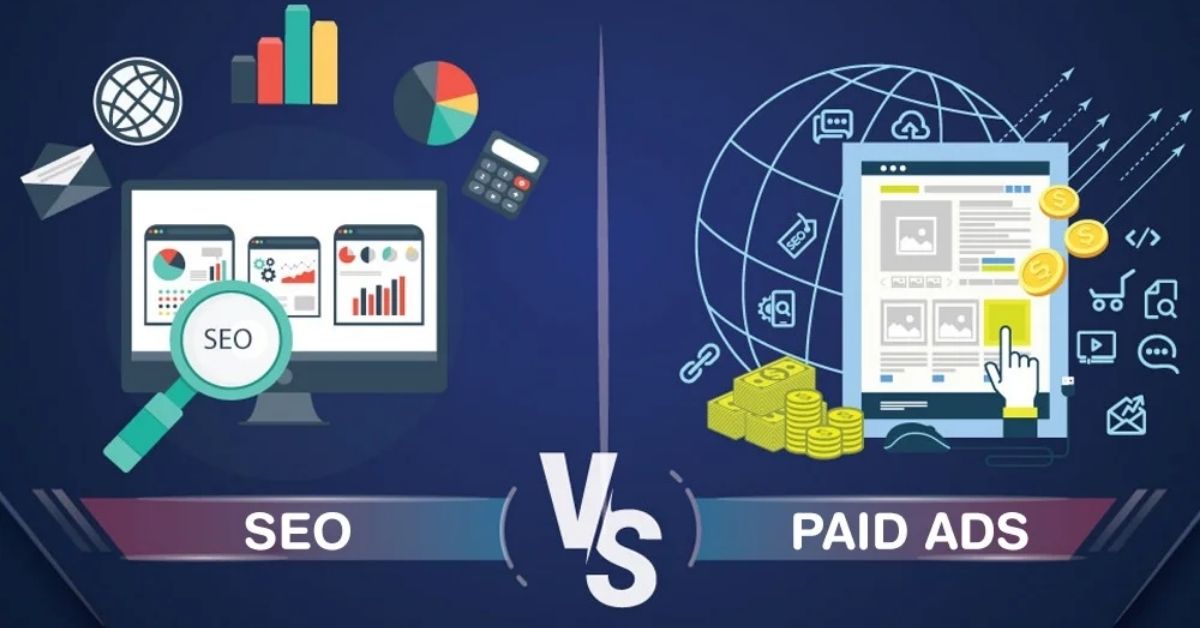
SEO and paid ads interact with each layer differently. SEO excels at capturing intent during evaluation and decision stages. Paid ads excel at forcing visibility during awareness and accelerating action. Understanding this funnel is essential before choosing where to invest.
What SEO really means for franchise systems
SEO is not just ranking a homepage. For franchises, SEO is an ecosystem of national authority, local presence, and conversion-focused content.
At the national level, SEO builds credibility around the franchise opportunity or the brand category. Informational pages, comparison content, and long-form guides attract high-intent prospects who are researching deeply. These users convert slower but at higher quality.
At the local level, SEO drives foot traffic, service calls, and store visits. Location pages, local listings, reviews, and geo-specific content determine whether a unit shows up when someone searches nearby.
SEO compounds because every asset builds on the last. A well-ranked page can generate qualified leads for years with no incremental cost per click.
What paid ads really mean for franchise systems
Paid advertising includes search ads, display ads, and social placements. Its defining feature is control. You choose the audience, the message, the geography, and the timing.
For franchises, paid ads are often used for three reasons. Speed, predictability, and scale. A new brand can appear on page one tomorrow. A new territory can be promoted instantly. A seasonal promotion can be turned on and off at will.
Paid ads do not compound in the same way SEO does. The moment spend stops, traffic stops. But the ability to test messaging, target specific profiles, and accelerate demand makes paid ads indispensable when used correctly.
SEO vs paid ads by franchise growth objective
Franchise sales and development
When the objective is selling franchise territories, SEO plays a long game. Prospective franchisees research extensively. They read comparisons, analyze costs, and look for validation. SEO content that answers these questions builds trust before the first call.
Paid ads, on the other hand, capture demand that already exists. Someone searching for franchise opportunities can be intercepted instantly. The challenge is cost and lead quality. Without strong filtering and nurturing, paid leads can be unqualified or impulsive.
The strongest franchise sales pipelines use SEO to educate and pre-qualify while using paid ads to accelerate volume in priority markets.
Local unit customer acquisition
For local customers, SEO dominates long-term performance. Appearing organically in local searches builds credibility and lowers acquisition costs over time. Reviews, proximity signals, and localized content create defensibility.
Paid ads work well for launches, promotions, and competitive markets. A new unit can buy visibility before SEO matures. Mature units often reduce ad spend once organic rankings stabilize.
Franchise systems that rely only on ads at the local level often face rising costs and inconsistent returns.
Multi-unit and area development
For multi-unit growth, the stakes are higher. Investors evaluating multi-unit opportunities behave differently than single-unit buyers. They analyze brand stability, unit economics, and scalability.
SEO content that demonstrates operational depth and market understanding attracts these investors organically. Paid ads can support outreach but rarely replace the credibility built through content and search visibility.
Timeline to results
SEO is slow to start and fast to compound. Paid ads are fast to start and slow to sustain.
SEO typically requires months to gain traction. Content must be indexed, authority must build, and rankings must stabilize. Once established, however, SEO delivers consistent leads without incremental cost.
Paid ads deliver results immediately. Campaigns can launch in days. But costs increase as competition grows, and optimization is ongoing.
Franchisors should align channel selection with urgency. If territories must be sold this quarter, paid ads are necessary. If sustainable growth over years is the goal, SEO is non-negotiable.
Cost structure and ROI dynamics
SEO costs are front-loaded. Investment goes into strategy, content creation, technical optimization, and ongoing maintenance. The marginal cost of each additional lead declines over time.
Paid ads are linear. Each lead has a cost. Scaling requires proportional increases in spend. ROI depends heavily on conversion rates and lead quality.
From a financial perspective, SEO behaves like an asset. Paid ads behave like a utility. Smart franchise systems treat SEO as infrastructure and paid ads as acceleration.
Lead quality and intent
SEO leads are typically higher intent. Users searching organically are often deeper in research mode. They read more, stay longer, and convert with greater seriousness.
Paid leads can vary widely in quality. With precise targeting and strong messaging, paid ads can attract excellent prospects. Without discipline, they attract browsers and price shoppers.
The misconception is that paid ads always produce lower quality leads. In reality, quality depends on targeting, landing pages, and follow-up systems. However, SEO naturally filters intent through search behavior.
Brand trust and perception
Organic visibility builds authority. When a franchise brand appears consistently in search results, it signals legitimacy. Prospects assume leadership and stability.
Paid ads do not create the same trust signal. Users know ads are paid placements. This does not mean ads are ineffective, but they do not replace organic credibility.
For franchise brands seeking long-term equity, SEO contributes directly to brand perception in a way ads cannot replicate.
Scalability across markets
SEO scales efficiently across multiple markets when structured correctly. A strong national domain with localized pages allows expansion without rebuilding from scratch.
Paid ads require separate budgets, creatives, and optimization for each market. Scaling is possible but operationally intensive.
For large franchise systems, SEO becomes the backbone that supports national and local growth simultaneously.
Compliance and consistency in franchising
Franchise marketing must remain compliant and consistent. SEO content allows for centralized control of messaging while supporting local customization.
Paid ads introduce more risk if franchisees run independent campaigns without oversight. Messaging drift and compliance issues are common.
Many franchisors centralize SEO while regulating or co-op funding paid ads to maintain control.
Data, attribution, and learning
Paid ads offer immediate data. Click-through rates, conversions, and costs are visible quickly. This makes ads excellent for testing messaging and offers.
SEO data accumulates over time. Insights emerge through trends rather than instant feedback. However, SEO reveals what prospects truly search for, providing invaluable market intelligence.
The most effective franchise marketers use paid ads to test and SEO to scale proven narratives.
When SEO outperforms paid ads
SEO outperforms paid ads when the franchise has time to invest, seeks lower long-term acquisition costs, values brand authority, and operates in stable markets. Mature brands, multi-unit systems, and service franchises benefit disproportionately from SEO dominance.
When paid ads outperform SEO
Paid ads outperform SEO when speed is critical, markets are highly competitive, or launches require immediate visibility. New franchise concepts and aggressive expansion phases rely on paid ads to create momentum.
The hybrid model that wins
The debate should not be SEO versus paid ads. It should be SEO plus paid ads with clear roles.
SEO builds the foundation. Paid ads accelerate outcomes. Together, they create resilience. Ads fill gaps while SEO matures. SEO reduces dependency on ads over time.
High-growth franchise systems allocate budgets dynamically. Early-stage brands lean on ads. As SEO strengthens, spend shifts toward content and optimization while ads focus on strategic pushes.
Budget allocation frameworks
A common mistake is splitting budgets evenly without strategy. Allocation should reflect stage and goals.
Early-stage franchisors may invest heavily in paid ads while laying SEO groundwork. Mid-stage brands balance both. Mature systems prioritize SEO maintenance and selective ad spend.
Budgeting should be reviewed quarterly based on performance, not tradition.
Measuring success correctly
SEO success is measured in rankings, organic traffic, engagement, and assisted conversions. Paid ad success is measured in cost per lead, conversion rates, and immediate ROI.
Comparing the two directly without context leads to flawed conclusions. Each channel serves different purposes at different times.
Franchise leaders must evaluate performance within the growth strategy, not in isolation.
Common mistakes franchisors make
Many franchisors abandon SEO too early because results are not immediate. Others overspend on ads without fixing conversion issues.
Another mistake is outsourcing both channels without internal strategy ownership. Channels should support a unified growth vision.
The most costly mistake is choosing one channel exclusively and ignoring the other.
Decision framework for franchise leaders
Ask three questions. How fast do we need results. How long do we plan to grow. How much control do we require.
If speed matters most, prioritize paid ads. If longevity matters most, prioritize SEO. If both matter, build a hybrid model with clear accountability.
The future of franchise growth marketing
Search behavior continues to evolve, but intent remains central. Franchises that own intent through SEO will remain defensible. Those that master paid distribution will remain agile.
The future belongs to systems that integrate channels, invest in quality content, and align marketing with operational readiness.
Final verdict
SEO vs paid ads for franchise growth is not a binary choice. It is a strategic balance.
SEO builds authority, trust, and long-term efficiency. Paid ads deliver speed, control, and scale. Franchises that understand when and how to deploy each channel grow faster, more predictably, and with greater resilience.
If your goal is sustainable franchise expansion, SEO is the foundation. If your goal is rapid acceleration, paid ads are the lever. The strongest growth engines use both with discipline and intent.