
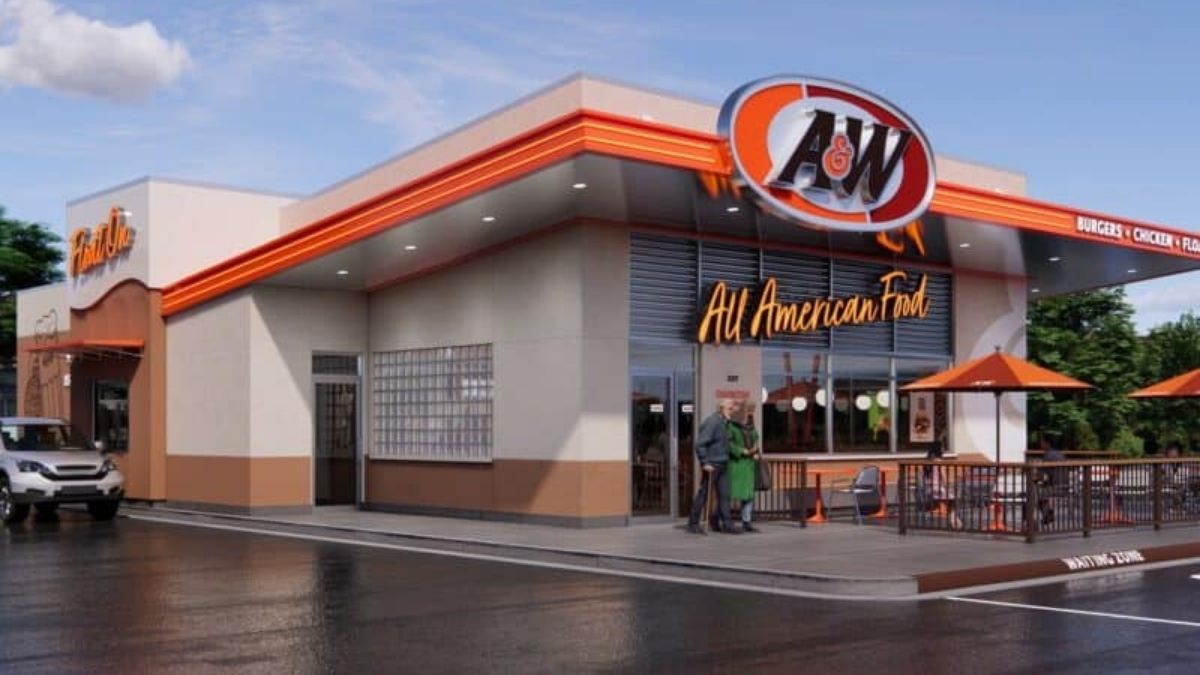
A&W Bets on Nostalgia and Hospitality With Modern Store Design
While many fast-food brands are making restaurants smaller and increasingly focused on quick transactions, A&W Restaurants is taking a different approach.
The historic restaurant chain has introduced a redesigned prototype that places considerable value on something that has gradually disappeared from parts of the quick-service industry: the experience of actually spending time inside the restaurant.
A&W’s new concept combines modern restaurant functionality with visual cues inspired by the chain’s classic diners and roadside root beer stands. It is part of a broader effort to modernize the business without removing the characteristics that have made the A&W name recognizable for generations.
Modernizing A&W Without Losing What Customers Remember
Older brands often face a difficult business decision.
Change too little and the company can begin to feel outdated. Change too much and the brand risks losing the identity customers valued in the first place.
A&W appears to be pursuing the middle ground.
The company’s latest prototype does not hide its history. Instead, the restaurant design turns that history into part of the customer experience.
Traditional Americana influences are combined with updated architecture and a more contemporary environment. The intention is to make the restaurant recognizable to someone who grew up with A&W while making it equally approachable to someone visiting for the first time.
That balance has become central to A&W’s modernization efforts.
A Larger Restaurant in an Era of Smaller Footprints
The physical dimensions of the prototype also make A&W’s strategy interesting.
The new restaurant format measures roughly 2,200 to 2,800 square feet, with room for approximately 35 to 70 diners.
That is a meaningful commitment to dine-in traffic at a time when restaurant development has frequently moved in the opposite direction.
Across the quick-service sector, brands have experimented with smaller dining rooms, drive-thru-heavy formats and units designed primarily around pickup and delivery.
Those concepts can create operational efficiencies, but they can also make one restaurant experience feel increasingly similar to another.
A&W sees the dining room as an opportunity to stand apart.
Instead of treating every customer interaction as a transaction that should happen as quickly as possible, the company wants to create an environment where people have a reason to remain in the restaurant.
Hospitality Becomes a Competitive Differentiator
There is a business argument behind the nostalgia.
Consumers have more ways than ever to obtain restaurant food. They can use a drive-thru, place a mobile order, request delivery or pick up food without spending more than a few minutes inside a building.
Convenience is no longer unusual. It is expected.
That makes the actual restaurant experience another area where brands can distinguish themselves.
A&W has been emphasizing what it calls Hometown Hospitality, placing more importance on personalized service and community connections.
That positioning fits the company’s history particularly well.
A&W built much of its reputation around experiences that naturally encouraged customers to slow down—from drive-in service to frosty mugs of root beer enjoyed inside neighborhood restaurants.
Bringing some of that personality into a modern QSR environment gives A&W an experience that is difficult for a purely digital restaurant model to reproduce.
Flexibility Matters for Franchise Development
Although the prototype emphasizes the customer experience, it was also developed with franchise growth in mind.
The range in restaurant size allows the concept to be adapted for different markets instead of forcing every new location into the same footprint.
That can become particularly important when expansion moves beyond predictable suburban development sites.
Real estate costs, available parcels, population density and local traffic patterns vary substantially from one market to another. Giving developers more flexibility can potentially open opportunities that would be difficult to pursue under a single fixed building format.
A&W has also indicated that its broader development strategy includes formats beyond traditional streetside restaurants, allowing the company to consider different types of locations as it expands.
Technology Is Being Added Without Replacing Human Service
The decision to emphasize hospitality should not be confused with resistance to technology.
A&W has been updating its restaurant technology and expanding the ways customers can interact with the brand.
Digital ordering, kiosks, online ordering and newer point-of-sale infrastructure are becoming part of the system.
The strategic difference is how the technology is being positioned.
A&W is not trying to eliminate the human side of the restaurant in the name of efficiency. Instead, technology gives customers more choices while employees remain part of the overall experience.
A customer who values speed can use digital tools. Someone who prefers traditional counter service can still have that interaction.
That flexibility may be particularly valuable for a restaurant chain serving several generations of consumers at the same time.
A&W Turns Its History Into a Growth Asset
A&W has been around since 1919, giving the company something few restaurant startups can acquire regardless of how much they spend on marketing: genuine history.
The brand is leaning into that advantage.
Under CEO and President Betsy Schmandt, A&W has been working to bring its nostalgic identity into contemporary marketing, restaurant design and operations.
The company has described this intersection of old and new as “newstalgia.”
The philosophy extends well beyond décor.
A&W continues to build around its root beer heritage while introducing new beverages and menu products. Marketing efforts are becoming more digital. Technology is being updated. Franchise development is receiving greater attention.
The objective is not to become another modern fast-food chain. It is to make A&W feel like a modern version of itself.
Growth Plans Extend Beyond the Prototype
The timing of the new design reflects A&W’s wider ambitions.
The company expects to add roughly 8 to 12 restaurants during 2026, with expansion efforts particularly focused on areas of the Upper Midwest where A&W already has significant brand recognition.
The prototype will form part of the foundation for additional development in both established and newer markets.
Restaurant prototypes rarely create growth on their own. Franchisee economics, real estate, operations, marketing and consumer demand ultimately determine whether development can be sustained.
But a strong prototype can help connect all of those pieces.
For A&W, the new restaurant design gives franchisees a more contemporary development platform while giving consumers a clearer idea of what the brand wants to represent.
A Different Approach to Restaurant Modernization
A&W’s strategy demonstrates that modernization does not always require erasing the past.
Sometimes a company’s history can become part of its competitive strategy—provided the experience surrounding that history continues to evolve.
The new A&W prototype preserves recognizable elements of the brand while bringing them into a restaurant designed for current customer expectations.
That could prove particularly valuable in a crowded fast-food industry where efficiency is increasingly common but memorable experiences are harder to create.
For A&W, the next phase of growth may depend on making an old-fashioned idea feel valuable again: giving people a reason to come inside, stay awhile and remember the restaurant.
Discover more about A&W Restaurants Franchise opportunities.