
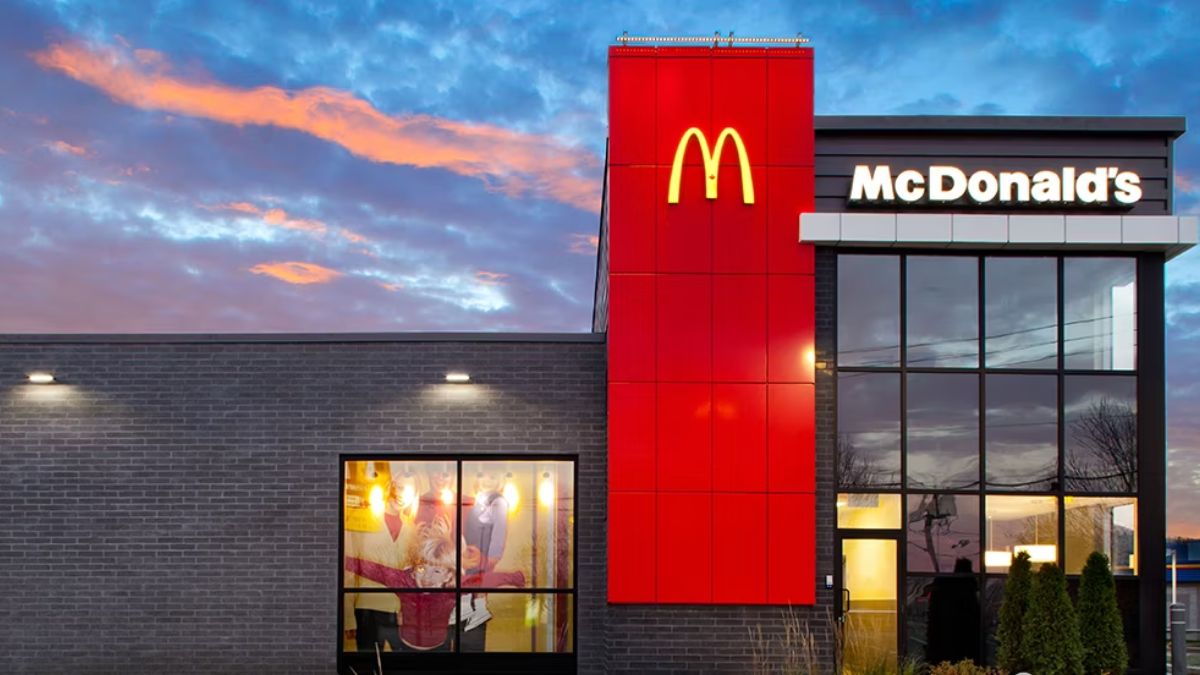
NEXT Strategy Targets Efficiency, Technology and New Restaurant Growth
McDonald’s is putting billions of dollars behind a simple business objective: make its restaurants more productive while giving customers more reasons to visit.
The global restaurant company plans to provide approximately $8.5 billion in support through 2036 as franchisees modernize restaurants and implement the McDonald’s > NEXT growth strategy.
Roughly $5 billion is scheduled to be provided by 2030 through capital contributions and rent relief.
The size of the commitment highlights one of the fundamental challenges facing mature franchise systems. Growth requires continuous reinvestment, but major upgrades must also generate returns that make financial sense for individual franchise owners.
McDonald’s believes NEXT can accomplish both.
A Modernization Plan Built Around ROI
Instead of treating restaurant remodeling as simply another mandatory capital expense, McDonald’s is positioning the program around measurable operating improvements.
The company is aiming for approximately 250 basis points of gross restaurant-level efficiency gains.
At the average U.S. restaurant, McDonald’s estimates the improvements could produce around $100,000 of annual cash-flow benefit.
After accounting for franchisor assistance, the company anticipates an approximately four-year investment payback for franchisees.
This focus on unit economics is particularly important because McDonald’s operates primarily through franchising. Independent operators run the overwhelming majority of restaurants in the global system.
Successful implementation therefore depends on more than corporate strategy. Franchisees need sufficient capital, operational capacity and confidence in the expected return.
McDonald’s Wants Restaurants That Are Easier to Run
One of the major themes behind NEXT is operational simplification.
Modern fast-food restaurants have become much more complicated.
A single kitchen may now serve drive-thru customers, dining-room guests, mobile app users, delivery orders, digital kiosks and curbside or pickup customers at the same time.
Adding sales channels can create more revenue opportunities, but it can also slow kitchens and increase pressure on employees.
McDonald’s plans to use redesigned restaurants, operational changes and technology to reduce some of that complexity.
New concepts may include better pickup infrastructure, refreshed dining rooms, enhanced McCafé preparation areas and restaurant layouts designed around changing customer behavior.
AI Moves Deeper Into Restaurant Operations
Technology will play a prominent role.
McDonald’s is developing ArchIQ, an operating platform supported by generative AI capabilities.
The broader goal is not simply adding technology for its own sake. McDonald’s wants technology that improves restaurant performance, simplifies crew tasks and creates a more consistent experience for customers.
At McDonald’s scale, improving a few seconds of service time or reducing small operational inefficiencies can have substantial financial implications across the system.
The company serves more than 70 million customers per day, giving it an unusually large platform on which to generate productivity gains.
Winning More Chicken and Beverage Customers
Restaurant modernization is only part of McDonald’s growth equation.
Menu competition is becoming increasingly important.
By 2030, McDonald’s is targeting approximately 1.5 percentage points of additional market share in chicken and another 1.5 percentage points in beverages.
At the same time, it intends to defend its long-established strength in beef.
The decision reflects changing competitive dynamics in quick-service restaurants.
Chicken has developed into one of the industry’s most important battlegrounds, while beverages have created new opportunities to generate visits during periods outside traditional breakfast, lunch and dinner occasions.
McDonald’s has already been experimenting with new beverage offerings and expects continued product development across these growth categories.
Loyalty Could Become an Even Bigger Growth Engine
Another major asset behind the strategy is McDonald’s digital ecosystem.
The company has nearly 220 million active loyalty members across roughly 70 markets.
That scale allows McDonald’s to move beyond broad discounting and increasingly use purchasing data to determine which promotions, products and experiences are most relevant to individual customers.
A stronger digital relationship can potentially improve frequency while allowing restaurants to market more efficiently.
Combined with upgraded stores and better execution, loyalty provides McDonald’s with another tool for generating incremental visits.
Hospitality Returns to the Strategy
Interestingly, one of the world’s largest technology-enabled restaurant companies is also placing renewed attention on a traditional part of the restaurant business: hospitality.
Through its Make It Golden initiative, McDonald’s intends to focus on better food execution and stronger interactions between employees and customers.
The strategy recognizes a potential downside of restaurant automation.
As customers increasingly order through apps, kiosks and delivery platforms, opportunities for direct interaction with restaurant employees can decline.
McDonald’s wants efficiency and hospitality to develop together rather than allowing technology to make the customer experience feel purely transactional.
Growth Goals Extend Beyond Existing Restaurants
NEXT is also connected to McDonald’s long-term financial targets.
The company expects restaurant development to contribute approximately 2.5% to systemwide sales growth in 2027, with the contribution settling closer to 2% by 2030.
Management is also targeting operating margins in the low-to-mid 50% range by the end of the decade.
McDonald’s expects baseline annual capital spending of about $3 billion from 2027 through 2030, in addition to capital support intended to accelerate elements of the restaurant modernization strategy.
A Franchise Growth Lesson Beyond McDonald’s
The most notable part of McDonald’s NEXT strategy may not be the technology or even the $8.5 billion headline.
It is the connection between corporate growth objectives and franchisee profitability.
Large franchise systems cannot sustainably modernize simply by asking operators to spend more capital. The stronger model is to demonstrate how investment can produce better unit economics and then structure support around achieving those returns.
McDonald’s is effectively betting that better operations will create the capacity for further growth.
If the projected efficiencies materialize, operators could benefit from stronger cash flow while the franchisor gains faster restaurants, updated technology, improved customer experiences and a more competitive system.
That alignment between franchisee ROI and brand-level growth will be one of the most important measures of whether McDonald’s NEXT strategy succeeds.
Discover more about McDonald’s Franchise opportunities.