
Scaling a franchise network requires more than signing development agreements. PJ’s Coffee is demonstrating how operational efficiency, franchisee retention, and brand differentiation can contribute to sustainable expansion.
The New Orleans-based coffee chain has been named one of Entrepreneur magazine’s Top 150 Franchise Brands for Multi-Unit Owners, earning the No. 89 position.
The recognition comes as the company continues refining its business model, strengthening relationships with existing franchise operators, and expanding its presence in domestic and international markets.
For franchisors and franchise development professionals, PJ’s Coffee provides a useful example of how established restaurant concepts can structure their systems around multi-unit growth.
Multi-Unit Development Is Becoming a Franchise Growth Priority
One of the most effective ways for franchise brands to expand is by encouraging qualified existing operators to invest in additional territories.
Multi-unit franchisees already understand the business model, operational expectations, staffing requirements, and customer experience standards.
That familiarity can reduce some of the learning challenges associated with opening additional locations.
Industry research indicates that multi-unit operators control nearly 60% of franchised establishments, demonstrating the importance of portfolio ownership throughout the franchise sector.
PJ’s Coffee has embraced this approach by developing systems intended to accommodate operators at different stages of growth.
Its franchise structure incorporates flexible location formats, repeatable operational processes, and training resources that can be applied across multiple coffee shops.
Why Existing Franchisees Matter to Expansion
For a franchisor, attracting new investors is important. However, retaining successful franchise partners and supporting their expansion can be equally valuable.
When franchisees decide to open additional units, their investment decisions may indicate confidence in the brand’s future.
PJ’s Coffee has secured commitments from operators with different business backgrounds.
Estepp Energy, a Kentucky company with an existing portfolio of convenience stores, entered into a seven-unit franchise development agreement in 2026.
The partnership demonstrates how coffee franchises can appeal to established operators seeking diversification.
Earlier development commitments included a three-location Louisiana agreement involving Teddy Amar and Andrew Jones.
These examples highlight a strategic advantage of multi-unit franchising: experienced operators can potentially use existing management capabilities, market knowledge, and business infrastructure to support expansion.
However, the benefits depend on the operator’s execution and the economics of each location.
Simplifying Operations to Improve Franchise Scalability
A significant challenge for growing restaurant franchises is maintaining consistent operations across locations.
Complex menus, extensive ingredient inventories, and inconsistent training procedures can create additional costs and operational pressure.
PJ’s Coffee addressed some of these challenges through a brand-wide transformation introduced in December 2025.
The initiative, called The Big Easy, focused on strengthening the customer experience while simplifying daily operations.
The company reduced its food menu by approximately 65% and its beverage flavor assortment by around 50%.
These adjustments were designed to concentrate resources on core products and reduce unnecessary operational complexity.
For multi-unit operators, a more focused menu may offer several advantages, including easier employee training, improved inventory management, and more consistent service delivery.
The actual financial impact will depend on store-level execution, sales mix, and operating costs.
Brand Differentiation in a Crowded Coffee Market
Coffee franchising is highly competitive, with established national chains and emerging drive-thru concepts competing for consumer attention.
PJ’s Coffee faces competitors including Starbucks, Dunkin’, Scooter’s Coffee, and Dutch Bros.
Rather than attempting to replicate the positioning of larger brands, PJ’s Coffee has strengthened its association with New Orleans culture.
Founded by Phyllis Jordan in 1978, the company has long emphasized quality coffee and traditional brewing methods.
Its latest brand strategy incorporates New Orleans-inspired products, hospitality standards, updated restaurant interiors, and consistent employee presentation.
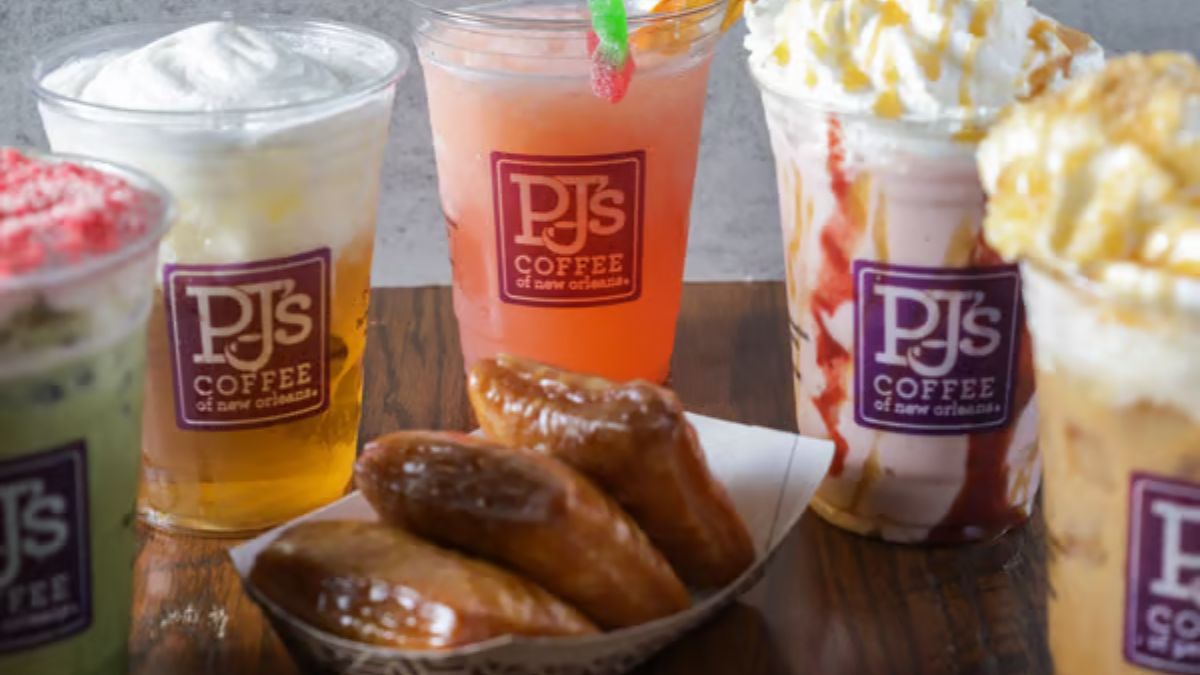
Signature flavors such as Bananas Foster and King Cake reinforce the brand’s regional identity.
This differentiation can be valuable in franchise development because investors often look for concepts with a clear market position.
A distinctive brand story can support marketing efforts, but it must be accompanied by strong unit-level performance to create long-term franchise value.
Operational Infrastructure Supports Multi-Location Ownership
Managing one coffee shop and managing ten require different capabilities.
As franchise operators expand, they need systems that support recruitment, training, financial oversight, inventory management, and consistent customer service.
PJ’s Coffee has positioned its operating model around providing franchisees with structured support as they pursue additional locations.
Flexible real estate formats can also create opportunities to enter markets where a traditional full-size café may not be practical.
This flexibility is particularly relevant for franchise development teams evaluating site availability, occupancy costs, and market penetration strategies.
The company’s nearly 200 operating locations, including four international units, provide an established platform for continued expansion.
Nevertheless, prospective multi-unit developers should evaluate whether the franchise system’s resources and economics align with their planned development schedule.
Consumer Demand Creates Opportunities, Not Guarantees
The coffee industry benefits from frequent consumer purchasing behavior.
Recent industry research shows that roughly two-thirds of American adults consume coffee, while specialty coffee has continued gaining popularity.
These consumption patterns create a substantial addressable market for coffee businesses.
However, strong category demand does not automatically translate into profitable franchise operations.
Real estate expenses, wage inflation, equipment costs, customer acquisition, and competition can significantly influence store performance.
PJ’s Coffee reports a history of annual comparable-store sales growth since 2013, but investors should verify the latest available results and assess whether performance varies across markets and store formats.
For franchise development professionals, this distinction is essential: consumer demand supports market potential, while unit economics determine whether expansion is financially sustainable.
Lessons Franchisors Can Learn From PJ’s Coffee
The company’s development strategy highlights several considerations for brands seeking to attract multi-unit investors.
First, scalability should be built into the franchise operating model rather than introduced after the network becomes difficult to manage.
Second, existing franchisees can become an important source of future development when they have the financial capacity and operational performance to expand.
Third, simplifying operations can help reduce friction as additional units are introduced.
Fourth, brand differentiation remains important even in established, high-demand industries.
Finally, franchise development strategies should balance unit growth with franchisee profitability, operational standards, and market conditions.
The Bigger Picture for Franchise Growth
PJ’s Coffee’s recognition as a leading multi-unit franchise brand reflects a development philosophy centered on repeatable operations and franchisee expansion.
Its combination of nearly five decades of brand history, updated operational systems, and multi-location development agreements provides a foundation for further growth.
For franchisors, the broader lesson is that sustainable franchise expansion depends on more than the number of agreements signed.
Long-term success requires an operating model that franchisees can manage effectively, a brand customers recognize, and financial performance capable of supporting continued investment.
Discover more about PJ’s Coffee of New Orleans Franchise opportunities.