
Shoot 360 Is Building More Than a Larger Franchise Network
Growth capital can help a franchise open more locations, but the most interesting investments often solve several scaling problems at once.
That appears to be the strategy behind Shoot 360’s newly announced $7 million funding round.
COPA Innovation Laboratories and COPA Venture Capital have invested in the technology-powered basketball training company while establishing a broader strategic partnership with the brand.
The agreement connects capital with real estate expertise, athlete-performance analytics, sports technology and franchise development at a point when Shoot 360 is already expanding rapidly.
For a growing franchise system, that combination could prove more important than the investment amount itself.
From Basketball Concept to Scalable Sports Platform
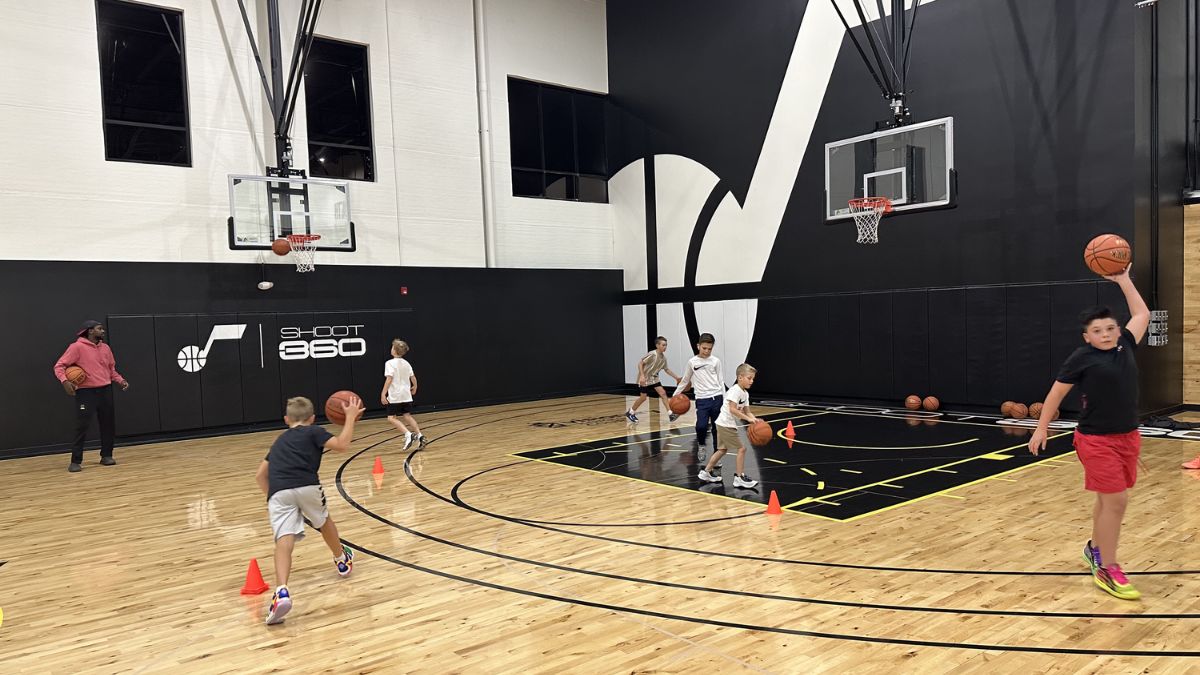
Shoot 360 was founded by Craig Moody in 2012 and has spent more than a decade developing a model that blends basketball coaching with technology.
The company’s training facilities use computer vision and proprietary software to measure athletic performance in real time.
A player taking a shot can receive immediate information related to mechanics and accuracy. Other training stations can measure passing, reaction time and ball-handling performance.
Training results become data points that athletes can compare over time.
Shoot 360 has now accumulated data from more than 600 million shots, giving the company an enormous performance dataset around one of basketball’s most fundamental skills.
But technology alone does not make the business scalable.
The larger challenge has been turning the technology into an operating model that can be consistently replicated across franchise locations.
That is where the company’s current growth story becomes particularly interesting.
A Development Pipeline Requires Infrastructure
Shoot 360 entered 2026 with considerable momentum.
The company opened 13 locations during 2025 and finished the year with approximately 60 locations around the world.
During the first half of 2026, another six franchise locations opened and five new franchise agreements were awarded.
The company also reported approximately 40 locations in development across the United States, Canada and Asia, with additional openings planned through the remainder of the year.
Managing that level of expansion creates challenges that are familiar to growing franchise systems.
Real estate needs to be identified. Franchisees need to be trained. Facilities must be constructed. Technology must be installed consistently. Local marketing programs must launch. Operational standards need to remain intact as the system becomes larger.
Expansion therefore requires more than selling franchises.
It requires an infrastructure capable of supporting the locations after the agreements are signed.
The COPA relationship potentially strengthens that infrastructure.
Real Estate Could Become a Major Growth Lever
One of the more strategic elements of the partnership is COPA’s connection to National SportsMall Realty.
Large indoor sports concepts require very different real estate from many conventional service or retail franchises.
Ceiling height, court dimensions, visibility, accessibility and surrounding demographics can all affect whether a location works.
Suitable properties can also be difficult to find in certain markets.
Access to a real estate network with experience in sports-oriented facilities could help Shoot 360 approach development more systematically as it enters additional markets.
There may also be opportunities to participate in larger multi-sport developments where several athletic concepts operate under one roof.
That type of environment could create natural traffic and complementary demand for basketball training.
Shoot 360 Is Testing Multiple Paths to Market
Another sign of the company’s evolving growth strategy is its relationship with LA Fitness.
Rather than opening every Shoot 360 as a conventional standalone location, the company is testing facilities inside existing LA Fitness and City Sports Club basketball spaces.
The initial pilot involves locations in Oregon, Washington and Northern California.
Its first location under the arrangement opened in Hillsboro, Oregon.
From a franchise-growth perspective, this strategy is notable because it tests whether Shoot 360 can operate successfully in more than one real estate format.
If the model performs well, existing fitness centers could provide an additional expansion channel alongside traditional franchise development.
For growing franchisors, having several viable formats can increase the number of markets and properties that become available.
International Markets Are Also Entering the Picture
Shoot 360’s growth is increasingly extending beyond the United States.
New locations have opened in Oakville, Ontario, and Saitama, Japan, while the company continues developing locations across North America and Asia.
The brand now has more than 65 locations internationally, with its total footprint moving toward roughly 70 facilities.
International expansion introduces another layer of complexity, but technology-driven systems can have an advantage when their core customer experience can be standardized.
Basketball is already played globally. Shoot 360’s challenge is to make its technology, operating system and franchise economics equally transferable.
Technology Helps Create a Recurring Customer Experience
The company’s business model also benefits from one characteristic increasingly valuable in franchising: ongoing customer engagement.
Athletes generally do not visit a training facility once.
Skill development requires repeated sessions.
Shoot 360 adds gamification and measurable performance tracking to that repeat-use behavior.
Players can watch their statistics change, compete in challenges and compare results while coaches continue guiding their development.
This creates a customer experience built around progress rather than simply access to a basketball court.
That distinction matters.
A court is a commodity. A system that measures improvement and encourages athletes to return can potentially build a stronger relationship with members.
Why the COPA Investment Matters
The most significant part of Shoot 360’s $7 million round may therefore be how the investment fits into an already developing growth strategy.
The company has a location pipeline.
It has proprietary technology.
It has an expanding international presence.
It is testing partnerships with major fitness operators.
Now it has an investor whose business interests overlap with sports science, athlete performance and sports real estate.
When those pieces work together, capital can be used not simply to grow faster but to remove some of the bottlenecks that prevent franchise systems from scaling effectively.
Shoot 360 still has to execute.
New units must perform. Franchisees must maintain standards. Technology must continue evolving. Alternative formats such as the LA Fitness pilot must prove sustainable.
But the company’s strategy increasingly resembles a multi-channel sports platform rather than a conventional single-format basketball franchise.
That may ultimately be the bigger story behind the investment.
The $7 million gives Shoot 360 more fuel, but its partnerships, technology and growing real estate flexibility could determine how far the franchise can actually go.
Discover more about Shoot 360 Franchise opportunities.