
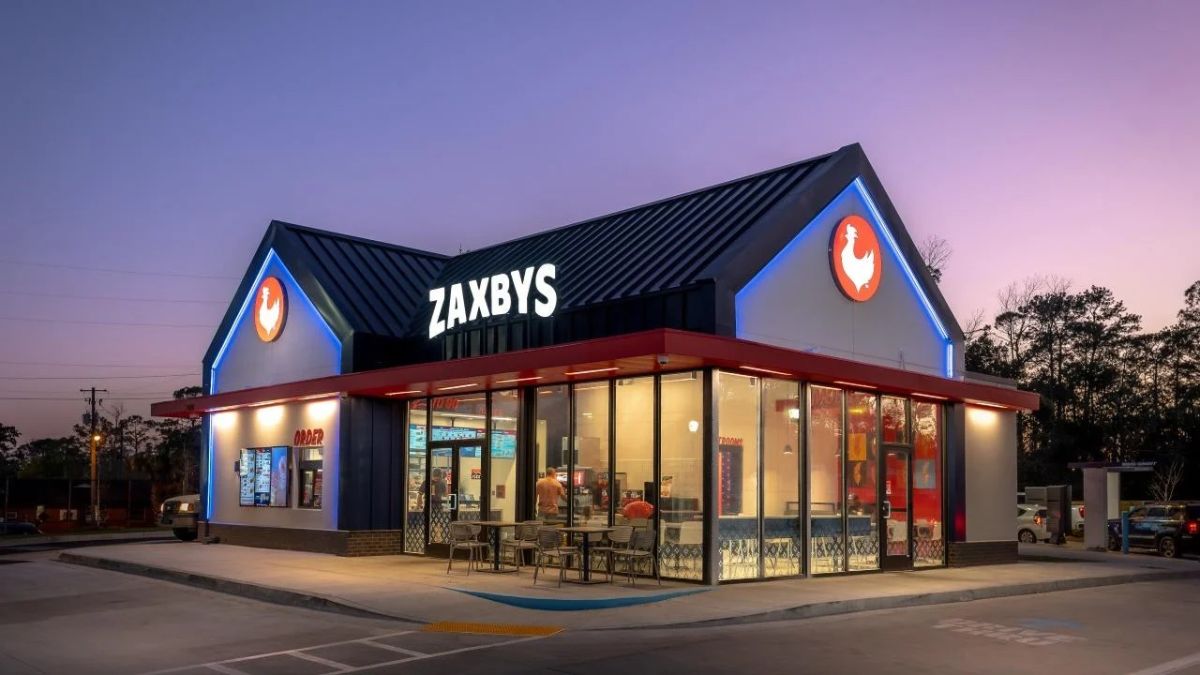
How Zaxby’s Is Using Nontraditional Restaurant Locations to Drive Franchise Growth
The next major opportunity in restaurant franchising may not be another standalone building along a busy commercial road. For expanding restaurant brands, airports, highway rest stops, college campuses, and other specialized locations are becoming increasingly important components of their development strategies.
Zaxby’s is embracing this shift by investing in nontraditional restaurant formats designed to reach customers in places where they already spend time.
The chicken restaurant chain recently established a five-unit development agreement with travel hospitality company Areas USA, bringing its menu to Florida Turnpike service plazas.
The decision reflects a broader change in restaurant growth strategy. Rather than focusing exclusively on adding conventional locations, brands are examining how flexible real estate, strategic operating partnerships, and customer accessibility can support expansion.
Why Restaurant Franchise Growth Is Moving Beyond Traditional Real Estate
For decades, restaurant expansion largely followed a predictable formula.
Franchisors identified promising communities, evaluated demographic conditions, secured visible retail properties, and developed restaurants capable of serving surrounding residential and commercial markets.
Although this approach remains important, it does not address every available growth opportunity.
Commercial real estate costs, development timelines, construction expenses, and market saturation can make traditional restaurant expansion increasingly complex.
At the same time, consumer dining habits have evolved.
Customers expect convenient access to food while commuting, traveling, studying, working, and participating in daily activities.
This creates opportunities for restaurant brands to develop locations within existing destinations instead of requiring customers to make separate trips.
Zaxby’s nontraditional development initiative is an example of how a mature franchise system can adapt its real estate strategy to capture additional demand.
A Five-Unit Agreement That Expands Customer Reach
The company’s partnership with Areas USA is particularly significant because it combines restaurant development with established travel infrastructure.
Under the agreement, five Zaxby’s locations are planned for Florida Turnpike service plazas.
The initial restaurant is already operating at the Turkey Lake Service Plaza in Orlando.
Unlike a typical neighbourhood restaurant, a highway service plaza serves customers who are temporarily passing through the area.
This creates a different type of demand.
Travelers may prioritize convenience, familiar menu items, speed of service, and the ability to purchase meals without leaving their planned route.
For Zaxby’s, establishing restaurants within these environments creates opportunities to introduce its products to consumers from numerous geographic markets.
The business value extends beyond transactions generated at an individual location. Exposure to travelers can also contribute to broader brand familiarity.
However, the ultimate commercial impact will depend on restaurant execution, customer conversion, operating expenses, and the economics of each service plaza.
Market Penetration Without Depending Entirely on New Territories
Traditional franchise expansion frequently focuses on geographic market development.
A restaurant brand enters a city, establishes an initial location, builds consumer awareness, and gradually increases restaurant density.
Nontraditional development introduces another approach.
Instead of expanding only through new neighbourhoods, brands can pursue locations that connect with different consumer occasions.
An airport restaurant may serve business travelers and tourists. A university location may attract students throughout the academic year. A highway plaza can reach drivers from multiple communities.
These locations can help brands participate in demand that conventional restaurants may not capture.
For Zaxby’s, this approach complements its broader national expansion.
After surpassing 1,000 restaurants, the company has continued entering markets outside its historical Southeastern base, including major metropolitan areas in the West and Northeast.
Adding nontraditional restaurants creates another potential layer of market penetration alongside traditional franchise development.
Restaurant Format Innovation as a Competitive Advantage
One of the more important elements of Zaxby’s strategy is its decision to move away from a single standard restaurant footprint.
The company previously depended heavily on a conventional building of approximately 3,000 square feet.
Today, its development platform includes multiple configurations under the Modern Farmhouse design initiative.
These options accommodate different combinations of dining space, drive-thru capacity, and operating requirements.
This flexibility matters because real estate conditions vary considerably between markets.
A property that cannot accommodate a full-service dining area may still support a smaller restaurant model.
A densely populated market might favour an efficient footprint, while a suburban location could benefit from additional drive-thru capacity.
For franchise systems, adaptable prototypes can improve the number of properties worth evaluating.
However, smaller footprints are not universally more profitable. Lower construction or occupancy costs must be balanced against production capacity, customer throughput, delivery access, and operational efficiency.
The appropriate format is the one that best supports the economics of a specific market.
How Strategic Partnerships Can Accelerate Franchise Development
Entering nontraditional environments often requires capabilities that differ from standard restaurant development.
Airport terminals, transportation facilities, and institutional properties may involve specialized leasing processes, operational restrictions, security requirements, and complex landlord relationships.
An experienced travel hospitality operator can help a restaurant brand navigate these conditions.
That is one reason the Areas USA agreement is strategically relevant.
Rather than approaching each highway location independently, Zaxby’s is working with an organization already involved in managing foodservice opportunities within travel destinations.
This type of arrangement can support coordinated development across multiple properties.
It can also help restaurant brands evaluate expansion opportunities that may otherwise be difficult to access through conventional real estate channels.
For franchisors pursuing national growth, partnerships with specialized operators may become increasingly important.
The Economics of Nontraditional Restaurant Development
Although nontraditional locations can provide attractive consumer exposure, their financial structure requires careful evaluation.
High customer traffic is valuable only when sufficient demand converts into profitable transactions.
A highway service plaza may experience strong seasonal travel patterns, while an airport restaurant may depend heavily on passenger volume and terminal activity.
University dining locations can experience fluctuations during academic breaks, and institutional properties may impose restrictions on operating hours or staffing.
Several financial factors deserve attention.
Occupancy costs can vary significantly depending on whether the agreement involves fixed rent, percentage rent, concession fees, or a combination of charges.
Labor planning must reflect expected customer volume and peak demand periods.
Restaurant layout must also support efficient production within the available space.
In addition, menu selection, equipment requirements, inventory management, and supply-chain logistics can influence operating margins.
Franchise developers should therefore evaluate nontraditional opportunities using site-specific financial projections rather than assuming that established brand performance will transfer automatically.
Brand Awareness Becomes Part of the Expansion Strategy
One overlooked benefit of nontraditional restaurant development is its potential contribution to brand discovery.
A restaurant located within a highway travel plaza can introduce its menu to consumers who live outside the brand’s existing trading area.
For a growing national chain, this exposure may support future customer acquisition in newly entered markets.
Zaxby’s menu, which includes chicken fingers, wings, sandwiches, salads, and signature sauces, provides recognizable quick-service categories that can appeal to customers looking for convenient meals.
The challenge is delivering an experience that encourages future visits.
Product consistency, service speed, food quality, and customer satisfaction become especially important when the restaurant is introducing itself to first-time customers.
A positive experience at a travel location may influence whether a consumer considers the brand elsewhere.
In this sense, a nontraditional restaurant can serve both as a revenue-generating operation and as a consumer touchpoint within the broader brand network.
Lessons for Franchisors Planning Multi-Unit Growth
Zaxby’s development strategy offers several useful lessons for franchise brands considering expansion beyond their existing restaurant models.
First, real estate flexibility can increase development options. Brands that can operate successfully across multiple footprints may be better positioned to enter markets with limited property availability.
Second, expansion should follow customer demand rather than relying solely on conventional site selection.
Third, strategic partnerships can provide access to specialized environments and operating expertise.
Fourth, restaurant-level economics must remain central to every development decision.
Finally, nontraditional expansion should reinforce the brand’s overall positioning rather than create an inconsistent customer experience.
These principles apply beyond chicken restaurants. Coffee chains, sandwich concepts, pizza franchises, dessert brands, and other quick-service businesses may also find opportunities in alternative locations when their operating models are suitable.
What Comes Next for Zaxby’s Growth Strategy?
Zaxby’s has already established a substantial national restaurant network, but its latest initiatives indicate that the company sees additional opportunities to expand its reach.
The five-location Florida travel plaza agreement, combined with its flexible restaurant designs and entry into new metropolitan markets, reflects a more diversified approach to franchise development.
The long-term effectiveness of this strategy will depend on execution.
New locations must generate sufficient demand, maintain operating standards, and deliver acceptable financial results.
For restaurant franchisors and multi-unit operators, the larger takeaway is clear.
Future growth may increasingly depend on developing the right combination of traditional restaurants, specialized locations, and adaptable operating formats.
Zaxby’s is putting that approach into practice as it pursues its next stage of national expansion.
Discover more about Zaxby’s Franchise opportunities.